
ISO 9001 is a generic standard, with terminology common to any type of context, scope, project and service: an aggregating standard.
When implemented well, certification can become the best way to begin institutionalizing integration and communication between areas and a culture of continuous improvement.
The latest revisions of the 2015 version have confirmed my opinion, making the standard more “integrable” with the numerous standards, reference models and frameworks available on the market.
I like this text from the standard that gives an idea of what is possible to achieve after good implementation: “An organization that adopts this approach generates confidence in the capability of its processes and the quality of its products, and provides a basis for continuous improvement.
This can lead to increased customer and other stakeholder satisfaction and also to the success of the organization.”
Speaking in more technical terms, what would the ISO series standards be then?
– Quality Management Systems: Fundamentals and Vocabulary – “Essential principles and vocabulary.” The ISO 9000 standard describes the principles of a quality management system and defines the terminology.
Quality Management Systems: Requirements – The ISO 9001 standard describes the requirements for a quality management system, whether for internal use, contractual use, or certification purposes. It is a set of obligations that the company must follow.
Quality Management Systems: Guidance for Performance Improvement - This standard forms a consistent pair with ISO 9001, providing guidance beyond the requirements set out in ISO 9001.
It is based on the eight principles of quality management: Customer focus, Leadership, People involvement, Process approach, Systems approach to management, Continuous improvement, Factual approach to decision-making and Mutual benefits in relationships with suppliers.
This standard describes “Guidelines for auditing quality management and/or environmental management systems”.
(Risk Management: Principles and Guidelines) – This may be a useful reference for organizations seeking a more formal enterprise-wide risk process, but is not mandatory.
This standard provides principles, a framework and a process for managing risk and can be used by any organization regardless of its size, activity or sector.
The concept of Process Management introduced by the standard is essential for any type, size, and current situation of an organization.
Processes are important for a small company that is growing or a large company that needs to control its processes.
Continuous improvement allows the company to grow or maintain its size as effectively as possible.
The new version of the standard that establishes the need for the quality management system to support business objectives and formalize risk management in the organization brings these benefits.
The concept of processes should raise some good questions so that the organization can establish the concept of continuous improvement, such as:
In this sense, the processes identified by the organization must be at least:
Another important concept that helps the company evolve and ensure that its processes support its business objectives is Continuous Improvement; the figure below represents the structure of Florac and Carleton, 1999.
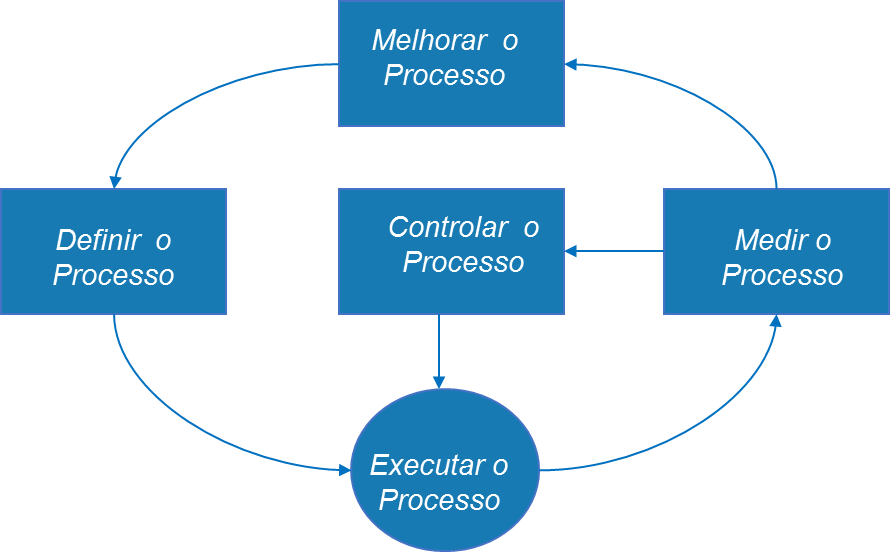
Hence the importance of defining strategic objectives and, above all, how to obtain information from processes (indicators) capable of identifying how much of the strategic objectives are being met.
Processes must be built and measured according to the strategic alignment established and supported by Senior Management.
A key concept highlighted in this latest version of the standard is Strategic Planning, so where should one begin this strategic planning process?
Below is a diagram outlining the main steps for developing a Strategic Plan.
What then should we do in the Operational Diagnosis:
I hope this has helped you understand what ISO is and how it can positively contribute to quality and process management in your organization.

CMMI AIM (Artificial Intelligence Maturity) is the framework for...
On March 11, 2026, Vasilios Syrakis received the email that many senior engineers have received: eight years at Atlassian, infrastructure...



Be the first to comment!