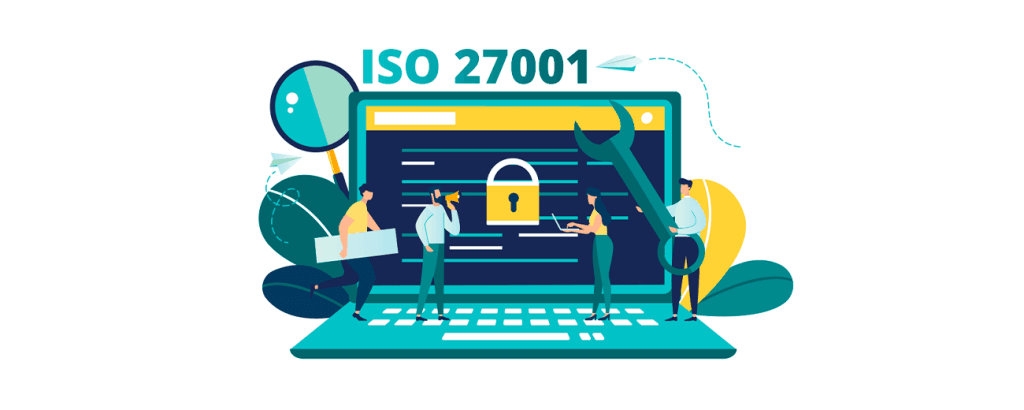
The requirements of ISO 27001 comprise a framework for information security. ISO 27001 focuses on an organization's people, processes, and technology and ensures that a framework is implemented to prevent breaches. Furthermore, the standard is used to ensure that an appropriate mechanism is created for reporting, logging incidents, and maintaining an organization's information security environment.
According to the LGPD (Brazilian General Data Protection Law), personal data is any and all information related to an identified or identifiable natural person, and is considered critical information that all Brazilian organizations need to protect. The requirements of ISO 27001 provide a framework for information protection that is fundamental to achieving compliance with the LGPD, helping to ensure that Brazilian companies can maintain customer trust in their ability to manage their personal data appropriately and securely.
This article aims to help explain how the ISO 27001 framework can help Brazilian companies establish a solid foundation for compliance with the LGPD (Brazilian General Data Protection Law). We present how some requirements of ISO 27001 can be related to data protection principles and how this accelerates their LGPD compliance process.
Continue reading this article to expand your knowledge of the ISO 27001 standard and complete a free self-assessment of your company, available at the end of the text.
The ISO 27001 standard is used for implementing an Information Security Management System (ISMS). Establishing an ISMS allows organizations to demonstrate that security risks are being continuously reviewed, managed, and addressed.
In some cases, the requirements can be accurately mapped to LGPD articles, where both share very similar content. In other cases, the requirements require some additional work to achieve LGPD compliance. Even when the LGPD diverges from the requirements found in the ISO 27001 framework, the core objectives do not differ radically.
Continue reading to learn about some ISO 27001 requirements that may be suitable for the controls required by the LGPD (Brazilian General Data Protection Law).
Data classification is a natural first step because it provides the ideal way to sort and prioritize data based on its sensitivity. A fundamental requirement for organizations wishing to achieve compliance with ISO 27001 requirements is the need to develop an asset inventory that will help you understand what information you possess and who is responsible for it (i.e., who owns it).
ISO 27001 does not prescribe classification levels (it allows you to define your own rules). This is something you should develop on your own, based on what is common in your industry. The larger and more complex your organization, the more confidentiality levels there will be. However, ISO 27001 places the responsibility on the asset owner. This is usually done based on the results of the risk assessment: the higher the value of the information (the greater the consequence of a confidentiality breach), the higher the classification level.
The ISO 27001 framework recommends implementing a data protection policy specifying requirements for data protection supported by data retention and destruction procedures. Meanwhile, the LGPD (Brazilian General Data Protection Law) provides specific recommendations for actions to be considered for the protection and privacy of personal data, including:
Several requirements of ISO 27001 can be used to support compliance with the LGPD (Brazilian General Data Protection Law) regarding the protection of personal data.
For example, let's look at encryption requirements. The use of encryption or pseudonymization can maintain the confidentiality of personal information, whether on the network, in transit, or on mobile devices.
Access control can ensure that only individuals with legitimate rights can access information according to their privilege level. Furthermore, IT systems must be sufficiently resilient to external attacks. Another control of the ISO 27001 framework requires companies to conduct vulnerability and penetration testing with due care to ensure that the systems being tested are not compromised.
The requirement to manage technical vulnerabilities under ISO 27001 requires organizations to apply patches to systems, maintain event logs, and implement other information security procedures.
The LGPD (Brazilian General Data Protection Law) requires organizations to notify about a personal data breach without undue delay and no later than 72 hours after becoming aware of a personal data breach. Implementing the Incident Management control of ISO 27001 will ensure "a consistent and effective approach to managing information security incidents, including communication about security events".
Incident management is one of the key processes for ensuring the effectiveness of any business operation. Incident management is an integral part of an organization's security policies and procedures related to backup, business continuity, disaster recovery, risk management, and configuration management.
Adherence to the requirements of ISO 27001 will ensure that organizations are in a position to quickly detect and effectively manage a personal data breach.
One of the requirements of the LGPD (Brazilian General Data Protection Law) is the implementation of data protection impact assessments, where companies will first have to analyze the risks to their privacy. The adoption of Privacy by Design, another requirement of the LGPD, becomes mandatory in the development of products and systems.
ISO 27001 helps ensure that “information security is an integral part of information systems throughout the lifecycle.” When a new technology is being deployed and may affect the rights and privacy of individuals, a privacy impact assessment becomes necessary. The assessment should also include a description of the measures planned to address the risks. Risk assessment (and treatment) is the most important step at the beginning of a project to implement ISO 27001 requirements; it lays the foundation for information security in your company.
ISO 27001 promotes a culture and awareness of information security within organizations. Information security isn't just about technology, it's also about people.
This is a similar approach used in ISO 27001 for managing suppliers and third parties. These requirements must be documented and agreed upon between controllers and processors.
In the pursuit of LGPD compliance, many companies research information and discover ISO 27001 and ISO 27701 along the way. ISO 27001 is a standard for implementing a management system focused on information security, while ISO 27701 is an extension of ISO 27001, aiming to add new controls to the management system to ensure the complete privacy of personal data.
Therefore, we recommend the ISO 27001 standard as a starting point for companies seeking LGPD compliance, as this standard encompasses the basic information security processes. When ISO 27001 is combined with ISO 27701, your LGPD compliance project becomes more fluid, precisely because ISO 27701 presents specific rules and processes for handling data privacy, which is the main objective of the LGPD.
Check out the ISO 27001 guide for LGPD compliance.
It's important to note that achieving ISO 27001 + ISO 27701 certification does not automatically make the company compliant with the LGPD. However, this certification demonstrates that the company has a robust management system that is committed to protecting personal data privacy, following market best practices for information security and data privacy management.
If your company is interested in complying with the requirements of ISO 27001, know that ProMove can assist your company on this journey.
ProMove has years of experience implementing and adapting processes based on ISO standards. Furthermore, our professionals are certified in Information Security and Data Protection, helping your company comply with security standards with minimal effort.
Before adapting to the LGPD (Brazilian General Data Protection Law), you need to know how your company's Information Security Management System (ISMS) is performing according to ISO 27001. Click on the image below and perform a free self-assessment and start your compliance process today.

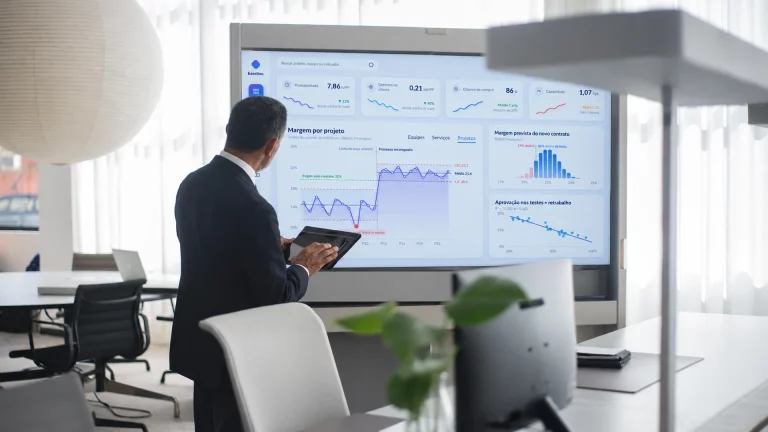
Statistical process control is the set of techniques that measures how a process behaves over time, separating fluctuations...
CMMI AIM (Artificial Intelligence Maturity) is the framework for...



Be the first to comment!