
The first step to learning more about facilitation techniques is to constantly seek out knowledge and share experiences. Consider taking advantage of excellent courses, workshops, and more.
Therefore, the Agile Facilitator course with the great instructors CFC and Samuel Cavalcante from K21 is a complete option for those who want to deepen their knowledge of facilitation techniques.
The techniques and learnings from the Agile Facilitator course can and should be applied to any type of meeting, conversation, and even to our personal life.
It is always necessary to maintain this parallel between the professional and the personal, as being happy is important in all aspects.
Given all this, you might be wondering: but how is it possible to use Agile Facilitator in so many ways?
To learn the techniques, you first need to know someone. Let's go:
One of the agile techniques is the implementation of teams formed by roles and functions. One of these is the facilitator.
This role requires skill in facilitating, as the name suggests.
In addition to having knowledge of the work method, this individual must enjoy teamwork and must always think of the collective good to encourage automated communication.
This helps improve communication, adding value to the company as a whole. Here's what a facilitator can do:
After learning more about the facilitator's main functions, it's clear that the Facilitator is certainly not a representative of the Team, an intermediary, or someone who makes decisions for the Team. Quite the opposite.
This individual must perform their role invisibly. Their presence in a discussion and/or meeting must be imperceptible.
But how is this possible, then? The Facilitator uses techniques that can help reduce communication barriers, keep the Team integrated, and generate effective communication.
Here's a list of techniques that generate the most and least discussion. Look:
The buy-a-decision technique is one of the least controversial. It can be used when there's a list to prioritize or when you need to select items from a very long list.
– Give a number of coins to each player;
– Each player prioritizes or selects in order of importance, betting a number of coins on each of the items on the list;
For example: we used this technique here at ProMove to choose the prizes for our game, and one of the players bet all of his coins (we had 14 for each team member) on coffee, meaning the coffee was selected as the prize without discussion.
The strength and weakness technique is one of the techniques that generates the most group discussion.
This method is used to listen to all possible opinions in order to enrich ideas.
– Put the problem on the agenda and allow the team to freely offer alternative solutions;
– For each alternative, let the team (never the person who proposed the idea) list the advantages (strengths) and disadvantages (weaknesses).
– Do this for all alternatives. Once this is done, to make the decision, one of the Dot Voting or Buy a decision techniques can be used.
Each of these techniques can generate more or less discussion. It's up to the facilitator to consider the need for each style, depending on the topic or objectives to be achieved.
For example, when you are in a retrospective where you need to quickly vote on what will be discussed in the meeting, the Dot Voting or Majority Decision technique is the most suitable.
But how can you stay focused on your goals and have productive meetings? There are some important techniques you can use:
If we establish Team Agreements, the meeting can help make the meeting much more productive, such as: leaving your cell phone on the table before the meeting; arriving 5 minutes early to start on time; and not having side conversations.
Starting the meeting with an agenda and ensuring that this agenda is followed with checkpoints throughout avoids unnecessary wear and tear on off-agenda discussions and side conversations.
Provide suitable environments – It is important that the meeting is always held in the best environment in the company, without noise and interruptions.
The Time Box serves to delimit the time between one agenda item and another, thus avoiding the “popcorn effect” – side conversations when the subject has already been closed.
It also helps prioritize issues, allowing, for example, more discussion time for complex, high-priority issues. This keeps the team focused and objective.
This method can be used when, mid-meeting, there are side discussions that aren't on the agenda. Here's how you do it: create a corner on your board with sticky notes on these topics.
If there is time, at the end of the meeting, return to the topics placed in the Parking Lot, always associated with a Time Box.
If there's no time, decide with the team whether it still makes sense to discuss the topic. If so, schedule another meeting just to address the remaining items.
The Facilitator must also deal with some dysfunctions that occur in teams. These include: the chatterbox, the jokester, the one who sparks discussion, the absentee, the disruptor, etc.
To address these dysfunctions, the facilitator can use the following techniques:
In short, techniques have already been described for Keeping the Team Integrated, Keeping the Team Focused, and dealing with dysfunctions.
Now, let's look at the techniques that the Facilitator can use to subtly interfere in the Team's processes:
Speaking the team's language and maintaining a common foundation is important, so the facilitator must be a cultural observer.
Questions should be asked with all the context necessary for the Team to make a decision.
Example of a question without context: "Now that you know the flaws, what is your decision for improvement?"
Example question with context: Remember that the number of defects has been increasing at a rate of 10%, and that the causes of the defects were analyzed. Thus, we saw that the root cause is our integration mechanism. What do you suggest to reduce the error rate?
As stated above, the facilitator needs to maintain an invisible posture, without influencing the team in any way.
For a Call to Action, questions with context are much more effective, objective, and clear.
Finally, we understand what techniques a facilitator needs to know to improve their company.
In this sense, I think you can now imagine what a Facilitator would be. What do you think of the list below? What would you include?
That's it. Interested in these facilitation techniques? Tell us in the comments which techniques you use to improve your company's meetings and projects!
In the next post I will talk about some personal and professional experiences with these techniques.
Additionally, I'll also show you a mind map that I use to help teams, companies, and families become more integrated, focused, and, above all, happy.

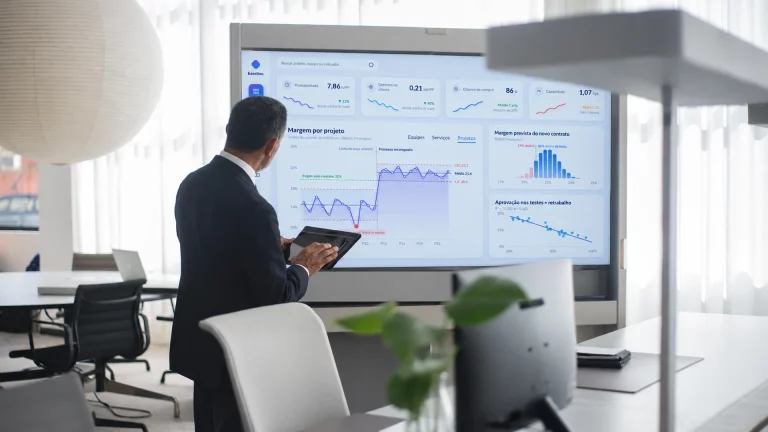
Statistical process control is the set of techniques that measures how a process behaves over time, separating fluctuations...
CMMI AIM (Artificial Intelligence Maturity) is the framework for...



Be the first to comment!