When it comes to information security on the internet, many business owners shrug their shoulders. However, more informed managers worry about it and might even panic when they learn that the valuable data they store so carefully could be viewed, altered, or captured by strangers with the intention of harming their businesses.
Cyberattacks have reinforced the need for IT security. Some companies even focus on offering services and establishing guidelines against computer system intrusions.
As demand for these services has grown significantly, new IT security trends are emerging. Check out the main ones now.
Essentially, artificial intelligence (AI) enables machines to make complex decisions for people. The capabilities it brings are beneficial because they reinforce security solutions with written algorithms, all aligned with an organization's strategies.
For example, codes can help identify a link as malicious, discover whether an email contains phishing or not, and boost biometric recognition software.
But an endless war could emerge from there. Cybercriminals could use AI tools that are as good as, or better than, IT administrators. Perhaps a security professional finds a way to counter a malicious attack, only for it to be discovered soon after by hackers, who counterattack in new ways.
The Internet of Things (IoT) refers to devices that were not originally designed to access a network, but do — and are still controllable from a distance.
With this reasoning, we can illustrate the union of physical and logical security: access control to a building using facial recognition. Such equipment would aim to protect people and assets from strangers through the use of informational methods.
The trend is for these two types of security to become increasingly closer, enabling uninterrupted improvements.
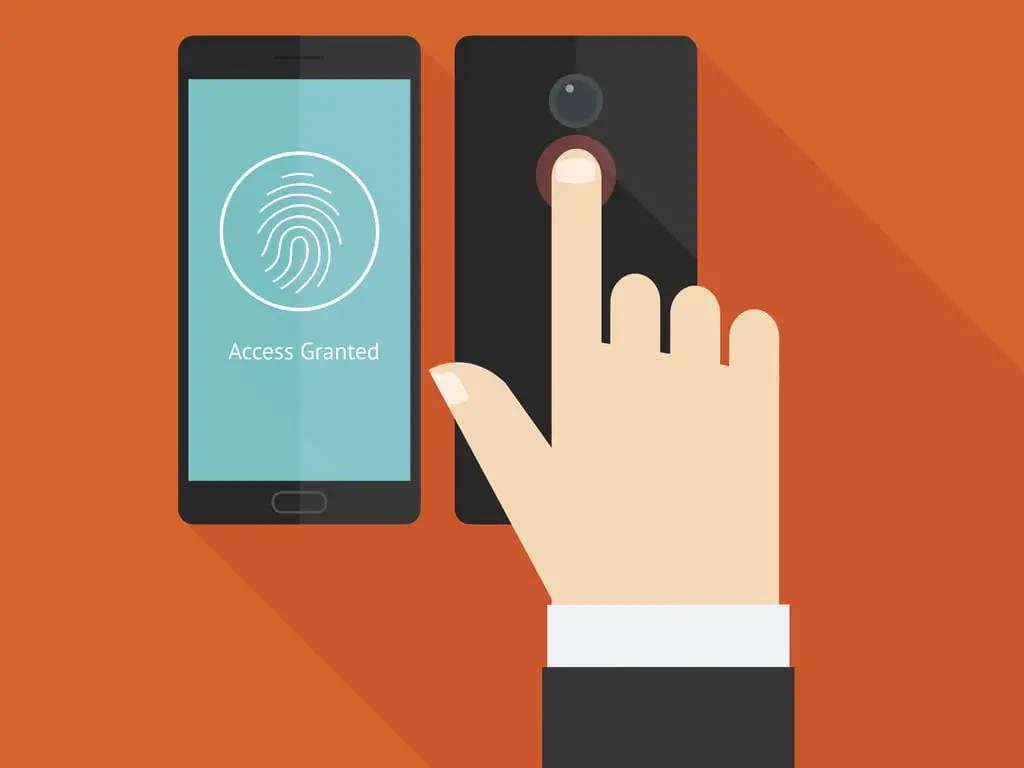
In information science, biometrics is the use of physical characteristics to grant permissions to people.
It's already a fact that biometric recognition is increasingly used. Banks, for example, have already adopted it in place of traditional passwords. Cell phones also have this mechanism.
Companies looking to permanently protect their information should pay close attention to this important security trend. The adoption of biometric security software capable of identifying voices, fingerprints, and facial shapes represents an insurmountable barrier to remote attacks.
Just as people with valuable assets take precautions against kidnapping, confidential items also deserve attention. Ransomware is a term that refers to data kidnapping.
When hijacking algorithms infect a machine, they prevent the owner from accessing information through encryption, but release it upon payment of a ransom, usually in virtual currency.
If the owner refuses to pay the amount set by the criminal, important files may be deleted or even disclosed.
Therefore, ransomware prevention is more than necessary and can be achieved through relatively simple measures, such as keeping antimalware software and operating systems up to date. Providing patches is also the responsibility of device manufacturers.
New forms of attack emerge all the time, and it's unlikely that you'll be able to combat them all satisfactorily—unless you have good antivirus software installed and regularly updated. Therefore, it's recommended that you rely on the manufacturer's technical support service.
It's worth noting that there's a wide range of programs (both paid and free) that promise to keep systems free from any and all threats. However, the truth is that free antivirus programs offer limited functionality, making them unsuitable for large and medium-sized businesses—typically those that hold a large amount of information.
Firewalls, in conjunction with other systems, are also welcome, as they work by analyzing traffic between the internet and the internal network, such as downloads. They only allow these types of operations if the user so desires.
Additionally, it's always a good idea to periodically back up to a drive without an internet connection.
One truth that every business owner must recognize is that human resources are as important, or even more important, than material resources in an organization. Therefore, training and guiding users of a computer system so they can identify dangerous situations becomes paramount.
This is because, unfortunately, even unintentionally, company employees can facilitate cybercrime. Inappropriate internet use (such as downloading attachments from questionable emails and gaming sites) can facilitate hacks and information capture. This training can include topics on cloud storage.
The Central Bank of Brazil (BACEN) created Resolution 4658:2018, which determines that financial institutions and companies authorized by it to operate must follow cybersecurity policies and specific regulations for contracting cloud computing services.
These legal standards also apply to outsourced companies that provide such services.
Regarding the contracting of cloud processing and storage service providers, the resolution states that contracting institutions must first verify the provider's ability to ensure the institution's access to its files, which will be stored with it.
Furthermore, contracted companies must guarantee the confidentiality, integrity, availability and recovery of processed data, if necessary.


Statistical process control is the set of techniques that measures how a process behaves over time, separating fluctuations...

CMMI AIM (Artificial Intelligence Maturity) is the framework for...



Be the first to comment!