
Many people already know that IT management is essential for most organizations. However, this is still a critical sector prone to errors, which can cause significant damage to the company's technological infrastructure.
After all, to deal with Information Technology, you need practical and theoretical knowledge, as well as a great capacity for renewal — due to the sector's continuous change.
Therefore, you, as an analyst or manager, must be aware of trends in this field to avoid glaring errors that can seriously affect the functioning of the company's processes.
With that in mind, we've listed four mistakes in this post so you can identify (and avoid!) them whenever possible. Stay tuned!
Within a company, there are several professionals at different levels who, in some way, need IT to perform their work.
There are many cases where everyone's performance can be compromised if the IT infrastructure doesn't operate as it should.
Therefore, it is crucial that you consider the information and criticism provided by system users — after all, they are the targets of the operations!
Since they are the ones who experience the business's technological solutions, you should listen carefully to their feedback on operational performance.
Malware and malicious software are becoming stronger and more complex every day. Therefore, you need to invest in developing security and privacy policies to keep your company's digital assets well-controlled.
This practice will result in a more effective work environment with a low incidence of vulnerability.
In this context, the organization can even implement a range of useful features, such as encryption, which block unauthorized access to sensitive information.
Control solutions allow for immediate tracking of security breaches, compromised accounts, and other issues that could harm the institution.
Another tip is to consider implementing the ISO 27000 standard in your company, which contains market-recognized best practices for information security.
Indicators, commonly referred to as KPIs, are essential for various areas. They can be used to monitor project progress, develop processes, and track operational failures/bottlenecks. This way, you'll gain in-depth insight into activities and, at the same time, implement improvements in IT management.
Performance indicators may refer to:
Each type of indicator used should be viewed as a management tool. In this way, you will be able to create high-performing teams, as well as a more productive and efficient process.
Because it is a significant investment, companies often forgo purchasing new management software and equipment.
Following an archaic mindset based on the expression "if it's working, don't change it," some analysts reject new trends and fail to improve the organization's technological infrastructure.
This type of practice must be avoided! To do this, continually seek out new developments that can enhance your business's activities to remain competitive in the market.
So, did you like our IT management tips? Subscribe to our newsletter to receive more relevant content like this directly to your inbox. See you next time!

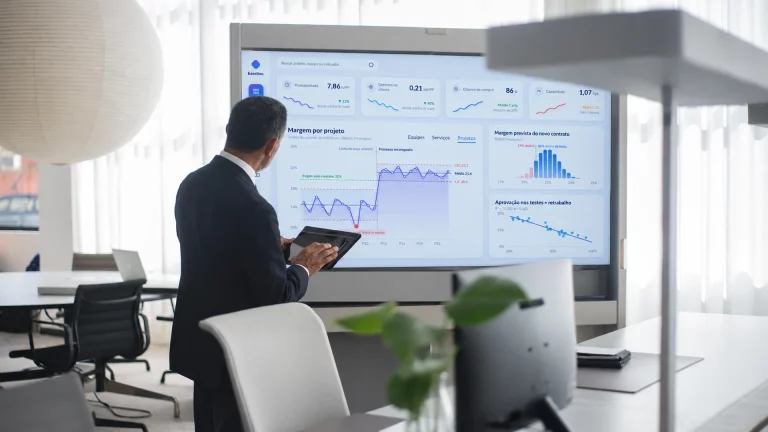
Statistical process control is the set of techniques that measures how a process behaves over time, separating fluctuations...
CMMI AIM (Artificial Intelligence Maturity) is the framework for...



Be the first to comment!